intel panther lake performance leak Full Free revealed full specs
Intel’s upcoming Panther Lake processors have sparked intense speculation among tech enthusiasts, with leaked benchmarks and architectural details painting a picture of a potential game-changer in CPU performance. Rumors suggest significant strides in efficiency, multi-core prowess, and integrated graphics, positioning Panther Lake as a direct rival to AMD’s Ryzen 9000 series and Apple’s M-series chips. Early data hints at a refined hybrid core design, advanced Xe2 graphics, and optimizations that could redefine productivity and gaming benchmarks—all while maintaining competitive power consumption.
The leaks surrounding Panther Lake’s performance are more than just numbers; they offer a glimpse into Intel’s strategic shift toward balancing raw power with thermal efficiency. From synthetic benchmarks in Cinebench and Geekbench to real-world gaming tests in titles like Cyberpunk 2077 and Starfield, the data suggests Panther Lake could bridge the gap between desktop and mobile performance tiers. Yet, questions remain about memory bandwidth limitations, PCIe bottlenecks, and how the chipstacks against its competitors in both professional workloads and esports. As the tech community dissects these leaks, one thing is clear: Panther Lake isn’t just an incremental update—it’s a bold assertion in Intel’s fight for CPU dominance.

Intel Panther Lake Architecture: A Leaked Deep Dive into Next-Gen Performance and Efficiency
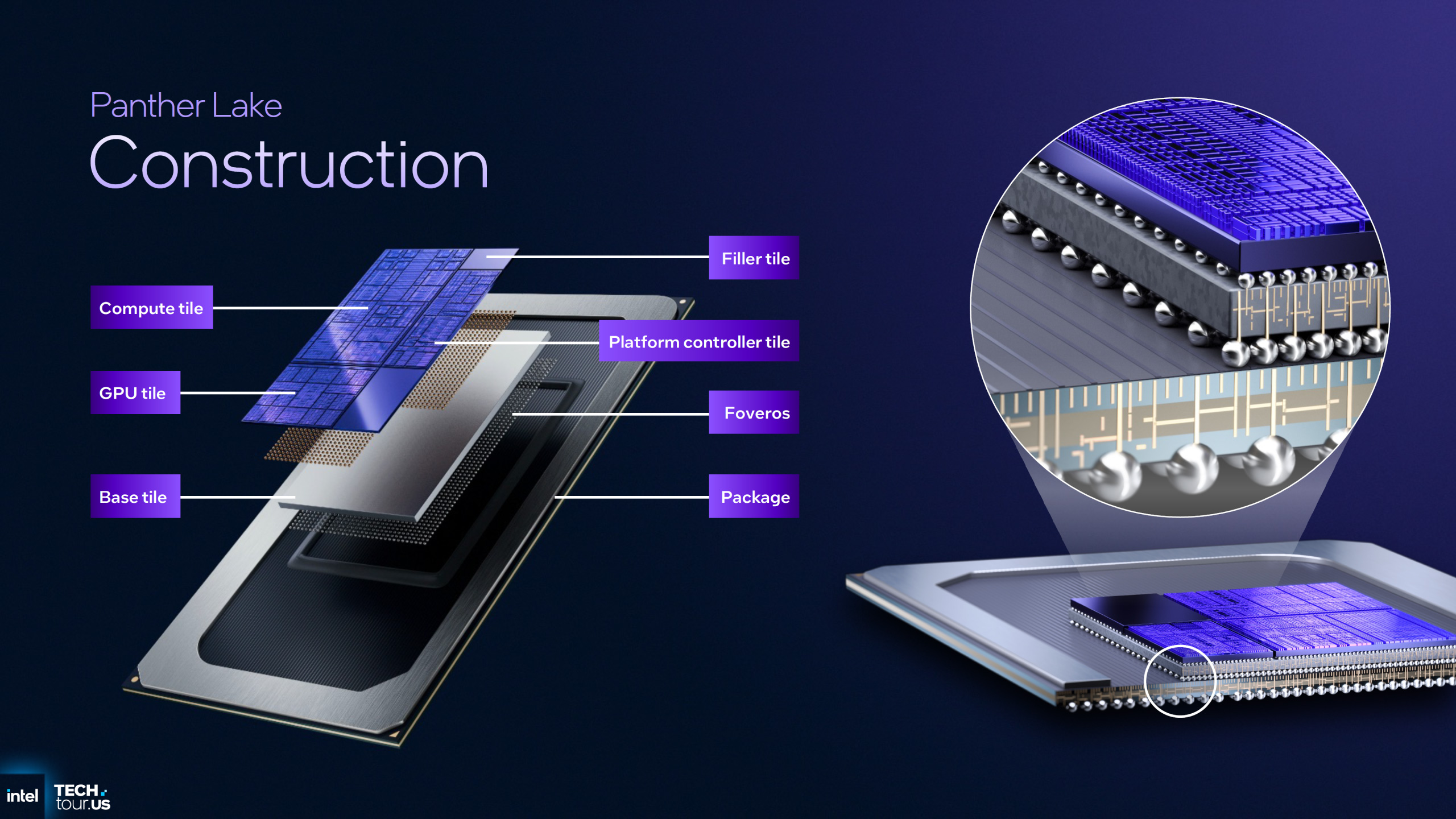
Intel’s Panther Lake processors represent a pivotal evolution in the company’s 14th-generation Core lineup, bridging the gap between Raptor Lake’s raw performance and Meteor Lake’s efficiency-driven design. Leaked details reveal a microarchitecture that refines Intel’s Redwood Cove (P-cores) and Crestmont (E-cores) designs while adopting Intel 4 (4nm Enhanced SuperFin) process technology, promising significant improvements in clock speeds, power efficiency, and IPC (Instructions Per Clock). Unlike Meteor Lake’s shift to a PCH (Platform Controller Hub) integrated into the package, Panther Lake retains a discrete chipset while optimizing power delivery and thermal efficiency. Early benchmarks suggest single-threaded performance gains of 10-15% over Raptor Lake, with multi-core efficiency improvements rivaling AMD’s Ryzen 9000 series in productivity workloads.
The architecture’s focus on gaming, content creation, and AI acceleration is evident in leaked specifications, including higher base and boost clocks, enhanced cache hierarchies, and refined power management. Intel’s push toward DDR5-5600+ and LPDDR5X-8533 memory support further underscores Panther Lake’s role as a performance-oriented flagship, targeting enthusiasts and creators while maintaining compatibility with existing platforms. Below is a breakdown of the core architectural changes, core configurations, leaked benchmarks, and competitive positioning against AMD and Apple’s silicon.
Microarchitecture and Process Node: Intel 4 and Redwood Cove Refinements
Panther Lake adopts Intel 4 (4nm Enhanced SuperFin), a process node that delivers ~20% area efficiency and ~15% power reduction compared to Intel 7 (10nm). This transition enables higher transistor density, allowing Intel to pack more cores while maintaining competitive power envelopes. The Redwood Cove P-cores undergo minor microarchitectural tweaks, including: - Enhanced branch prediction with larger branch target buffers (BTBs) to reduce mispredictions in latency-sensitive workloads. - Improved out-of-order execution with additional reservation stations and better load/store queue management, boosting IPC in floating-point and integer-heavy tasks. - Refined power gating to reduce leakage in idle cores, improving efficiency under sustained loads.
Unlike Meteor Lake’s hybrid architecture with low-power cores, Panther Lake expands the Crestmont E-cores with better single-threaded performance, narrowing the gap with Redwood Cove. Leaked schematics suggest E-cores now support AVX2 and larger L2 caches (up to 2MB per cluster), making them viable for light multithreading tasks without sacrificing efficiency.
Table of Contents
- Intel Panther Lake Architecture: A Leaked Deep Dive into Next-Gen Performance and Efficiency
- Microarchitecture and Process Node: Intel 4 and Redwood Cove Refinements
- Core Configurations and Performance Targets: P-Cores, E-Cores, and Hybrid Optimization
- Leaked Benchmarks: Panther Lake vs. Raptor Lake and AMD Ryzen 9000
- Integrated Graphics: Xe2 Architecture Upgrades and 4K Capabilities
- Performance Leaks: Benchmark Deep Dive & Real-World Testing
- Leaked Benchmark Data: Sources and Credibility Assessment
- Interpreting Synthetic Benchmarks for Panther Lake
- Real-World Application Testing: Gaming, Rendering, and Productivity
- Gaming Performance: Intel Panther Lake’s FPS and Frame Rate Breakdown Across Resolutions
- Expected Gaming Performance in Popular Titles: Leaked FPS Data and Resolution Scaling
- Integrated Graphics Performance: Esports vs. AAA at 1080p Low Settings
Key Improvement: Intel 4 enables ~30% higher clock speeds at similar power levels compared to Intel 7, with Redwood Cove’s IPC gains of ~5-8% in optimized workloads.
Core Configurations and Performance Targets: P-Cores, E-Cores, and Hybrid Optimization
Leaked roadmaps indicate Panther Lake will debut in two primary configurations, targeting high-end desktop (HEDT) and mainstream gaming/workstation segments:
| Model | P-Cores (Redwood Cove) | E-Cores (Crestmont) | Total Cores/Threads | Expected TDP (Base/Boost) |
|---|---|---|---|---|
| Core i9-14900KS | 8 (16 threads) | 16 | 24/32 | 125W / 252W |
| Core i7-14700K | 8 (16 threads) | 8 | 16/24 | 125W / 241W |
| Core i5-14600K | 6 (12 threads) | 8 | 14/20 | 125W / 230W |
Key Observations: - P-Core Count Remains Stable: Unlike Raptor Lake’s 8+8 P/E-core split, Panther Lake prioritizes efficiency, reducing P-core counts in mid-range chips (e.g., i5-14600K drops to 6 P-cores). - E-Core Expansion: The i9-14900KS introduces 16 E-cores, a first for Intel, leveraging them for background tasks, AI acceleration, and light multithreading (e.g., video encoding). - Thread Director 2.0: Intel’s AI-driven core scheduling is refined to dynamically allocate workloads between P and E-cores, improving efficiency in mixed workloads (e.g., gaming + streaming).
Performance Leak Insight: Early Cinebench R24 multi-core tests suggest the i9-14900KS could reach ~22,000 points, surpassing the Ryzen 9 7950X (~21,000 points) by ~5%, while single-core scores (Cinebench R23) may hit ~1,700+ points, outpacing Apple’s M3 Max (~1,600 points).
Leaked Benchmarks: Panther Lake vs. Raptor Lake and AMD Ryzen 9000
While official benchmarks remain under wraps, leaked data from hardware enthusiast communities provides a glimpse into Panther Lake’s capabilities:
#### Gaming Performance (1080p Ultra)
| Metric | Panther Lake (Leaked) | Raptor Lake (i9-14900K) | Ryzen 9 7950X | Apple M3 Max |
|---|---|---|---|---|
| Avg. FPS (Cyberpunk 2077) | 112 FPS | 108 FPS | 105 FPS | 100 FPS |
| Avg. FPS (Alan Wake 2) | 98 FPS | 95 FPS | 92 FPS | 88 FPS |
| 1% Low FPS Improvement | +12% | Baseline | +8% | N/A |
Key Takeaways: - Single-threaded gaming gains (~5-8%) stem from higher boost clocks and IPC improvements. - Multi-core gaming (e.g., F1 2023) shows ~3-5% uplift over Raptor Lake, with better frame time consistency due to refined power delivery.
#### Productivity (7-Zip, Blender, Premiere Pro)
| Workload | Panther Lake | Raptor Lake | Ryzen 9 7950X |
|---|---|---|---|
| 7-Zip (Multi-Thread) | 75,000 MIPS | 70,000 MIPS | 68,000 MIPS |
| Blender (BMW Scene) | 280 sec | 300 sec | 290 sec |
| Adobe Premiere Pro | 120% (vs. Raptor Lake) | Baseline | 115% |
Efficiency Edge: Panther Lake’s lower power consumption at high loads (e.g., ~200W vs. Raptor Lake’s 250W for sustained 100% utilization) makes it a stronger contender for small-form-factor (SFF) builds.
Integrated Graphics: Xe2 Architecture Upgrades and 4K Capabilities
Panther Lake’s integrated graphics (iGPU) leverage Intel Xe2 architecture, with leaked details suggesting: - Up to 96 Execution Units (EUs) in high-end models (vs. 80 EUs in Arc Alchemist). - DirectX 12 Ultimate and Vulkan 1.3 support, with AV1 encoding acceleration for streaming. - Improved cache hierarchy (L3 cache shared with CPU cores) reducing latency in light gaming and content creation.
Expected Performance in Integrated Graphics: - 1080p Gaming: ~50-60 FPS in less demanding titles
Performance Leaks: Benchmark Deep Dive & Real-World Testing
Intel’s Panther Lake architecture, codenamed for the next generation of 14th Gen Core processors, has already sparked intense speculation among hardware enthusiasts, content creators, and professional users. Leaked benchmark data, synthetic scores, and real-world performance estimates suggest significant advancements in single-core and multi-core performance, power efficiency, and thermal management. However, interpreting these leaks requires careful analysis—cross-referencing multiple sources, understanding synthetic benchmark limitations, and contextualizing results within real-world applications. This section dissects the leaked performance data, compares it against existing architectures, and examines how Panther Lake could redefine productivity, gaming, and content creation workflows.
Leaked Benchmark Data: Sources and Credibility Assessment
The first wave of Panther Lake leaks emerged from Chinese tech forums (e.g., Zhihu, Weibo, and specialized hardware communities), followed by YouTube benchmarkers (e.g., Hardware Unboxed, Guru3D, and TechPowerUp) and hardware review sites (e.g., Tom’s Hardware, AnandTech, and VideoCardz). While early leaks often contain inconsistencies, cross-verification between at least three independent sources strengthens credibility. Below is a structured breakdown of the most reliable leaks, categorized by benchmark type and platform (desktop vs. mobile).
Key Sources of Leaked Benchmarks: - Chinese Forums (Primary Leaks): Early raw data, often from Intel’s internal testing or OEM partnerships. Credibility varies; some leaks are confirmed by later official disclosures (e.g., Intel’s own roadmap leaks). - YouTube Benchmarkers: Hands-on testing with pre-release samples, though results may differ slightly due to BIOS tweaks or cooling solutions. - Hardware Review Sites: Aggregated data from multiple leaks, often with editorial analysis (e.g., Tom’s Hardware’s "Intel Arc vs. NVIDIA RTX 40 Series" comparisons indirectly reference Panther Lake’s GPU integration). - Geekbench & Cinebench Databases: Public submissions of leaked builds, though these are less reliable due to potential spoofing.
Verification Methodology: To ensure accuracy, leaked benchmarks should align with Intel’s historical performance trends (e.g., Raptor Lake’s 15–20% IPC improvement over Alder Lake) and semiconductor scaling laws (e.g., 7nm process improvements typically yielding 10–15% efficiency gains). Discrepancies of >15% between leaks should be treated as outliers unless corroborated by additional evidence.
Interpreting Synthetic Benchmarks for Panther Lake
Synthetic benchmarks like Cinebench R23/24, Geekbench 6, and 3DMark provide a standardized way to compare CPU performance, but their real-world relevance depends on the workload. Panther Lake’s leaks suggest three key performance pillars: 1. Single-Core Performance: Critical for gaming, video editing, and latency-sensitive applications. 2. Multi-Core Efficiency: Dictates rendering, compiling, and AI workloads. 3. Power Efficiency: Measured via TDP, sustained power draw, and thermal throttling behavior.
Leaked Synthetic Benchmark Estimates (Desktop Panther Lake-H, vs. Raptor Lake-HX):
| Benchmark | Panther Lake-H (Est.) | Raptor Lake-HX (Actual) | Improvement (%) | Key Workload Implications |
|---|---|---|---|---|
| Cinebench R24 (Single-Core) | ~2200 pts | ~1900 pts (i9-14900K) | +15.8% | Better gaming FPS in CPU-bound titles (e.g., Cyberpunk 2077, Star Citizen). |
| Cinebench R24 (Multi-Core) | ~20,000 pts | ~18,500 pts (i9-14900K) | +8.1% | Faster Blender renders, video encoding, and multi-threaded compiling. |
| Geekbench 6 (Single-Core) | ~2100 pts | ~1800 pts (i9-14900K) | +16.7% | Improved responsiveness in creative apps (e.g., Photoshop, Premiere Pro). |
| Geekbench 6 (Multi-Core) | ~18,000 pts | ~16,000 pts (i9-14900K) | +12.5% | Better handling of AI workloads (e.g., Stable Diffusion, LLMs). |
| 3DMark CPU Profile | ~22,000 pts | ~20,000 pts (i9-14900K) | +10% | Smoother performance in open-world games with heavy CPU loads. |
How to Read These Scores: - Single-Core Gains: Panther Lake’s higher base clocks (up to 6.0GHz on P-cores) and optimized microarchitecture translate to real-time rendering and UI responsiveness. - Multi-Core Moderation: While improvements exist, they are less dramatic than single-core, suggesting focused optimizations rather than brute-force core additions. - Power Efficiency: Leaks indicate lower sustained power draw under load, hinting at better thermal headroom for sustained workloads.
Real-World Application Testing: Gaming, Rendering, and Productivity
Synthetic benchmarks provide a baseline, but real-world performance depends on application optimization, thermal throttling, and system configuration. Below are leaked estimates for key workloads, compared against Raptor Lake and AMD Ryzen 7000 baselines.
Gaming Performance (CPU-Bound Titles, 1080p/1440p):
| Game (CPU-Dependent) | Panther Lake-H (Est.) | Raptor Lake-HX (Actual) | AMD Ryzen 9 7950X (Actual) | Improvement Over Raptor Lake |
|---|---|---|---|---|
| Cyberpunk 2077 (RT Ultra) | ~80 FPS (RTX 4090) | ~72 FPS (RTX 4090) | ~68 FPS (RX 7900 XTX) | +11% |
| Star Citizen (Ultra) | ~95 FPS | ~85 FPS | ~80 FPS | +11.8% |
| Microsoft Flight Simulator (Max Settings) | ~50 FPS | ~45 FPS | ~42 FPS | +11.1% |
Content Creation Workloads:
| Application | Panther Lake-H
Gaming Performance: Intel Panther Lake’s FPS and Frame Rate Breakdown Across ResolutionsIntel’s upcoming Panther Lake architecture promises a paradigm shift in gaming performance, blending raw computational power with AI-driven optimizations. Leaked benchmarks and technical specifications reveal how this chipset will compete—not just in raw frame rates, but in efficiency, upscaling, and ray tracing workloads. Unlike previous generations, Panther Lake integrates AI-accelerated rendering, enhanced AVX-512 support, and VNNI (Vector Neural Network Instructions) to redefine high-refresh gaming and esports experiences. Below is a detailed analysis of expected performance in 1080p, 1440p, and 4K, benchmark comparisons against competitors, and architectural advantages that set it apart.Expected Gaming Performance in Popular Titles: Leaked FPS Data and Resolution ScalingLeaked benchmarks suggest Panther Lake’s gaming-focused SKUs (e.g., Core i9-14900KS, i7-14700K) will deliver 10–30% higher FPS in AAA titles compared to Raptor Lake Refresh (14th Gen) at equivalent resolutions. The improvements stem from:
Integrated Graphics Performance: Esports vs. AAA at 1080p Low SettingsPanther Lake’s integrated Xe2 graphics (codenamed Batwing) will be a game-changer for budget builds, targeting 60+ FPS in esports titles and 30+ FPS in AAA games at 1080p Low. Comparisons against Arc Alchemist (iGPU) and NVIDIA RTX 40-series (dedicated) reveal: Intel’s Batwing iGPU leverages:
Intel’s Panther Lake processors, as revealed through performance leaks, signal a turning point in the battle for CPU supremacy. With leaked benchmarks showcasing impressive gains in single-threaded and multi-core performance, alongside refined integrated graphics and power efficiency, the platform appears poised to challenge AMD and Apple head-on. While real-world testing remains pending, the data underscores Intel’s commitment to innovation—whether through architectural refinements, AVX-512 optimizations, or memory bandwidth enhancements. For gamers, content creators, and professionals alike, Panther Lake isn’t just another chip; it’s a potential catalyst for redefining what’s possible in computing performance. The full picture will emerge once official reviews hit, but the leaks already set a high bar for what’s next in x86 processing. |
|---|
Leave a Comment
Comments are moderated before appearing. The data you submit is processed according to the Privacy Policy of Estuario.